

ONE YEAR AFTER THE L.A. FIRES:
DESIGNING RESILIENCE FOR CALIFORNIA
One year after the devastating Los Angeles wildfires, we pause to honor the communities still rebuilding their homes and lives. With offices in both Los Angeles and San Francisco, BAR Architects & Interiors has seen firsthand how fire recovery affects families, neighborhoods, and the broader California community — making this work deeply personal for our team, partners, and clients.
Yet the story of fire is not confined to a single city. Wildfire has become a defining condition across California, with Wildland-Urban Interface (WUI) accounting for roughly half of all building losses statewide.
Recovery is measured not in months, but in years. Today, fewer than one percent of the residences destroyed in the 2025 Los Angeles fires have been fully rebuilt. At the same time, thoughtful mitigation — from defensible space to material selection and building form — can reduce potential home loss by as much as 75%. The difference between vulnerability and resilience is not abstract; it is shaped by decisions made long before the next fire arrives.
This is where architecture carries responsibility. Our role extends beyond reconstruction to anticipating risk, working in partnership with policy and science, and designing environments that respect California’s natural forces while shaping homes and communities that are not only safer, but also enduring, humane, and deeply connected to place.
In this article, you’ll see how BAR is turning knowledge into action, gain access to guidelines, resources, and the new California fire code — and we hope you’ll join the conversation on shaping resilient design across the state.
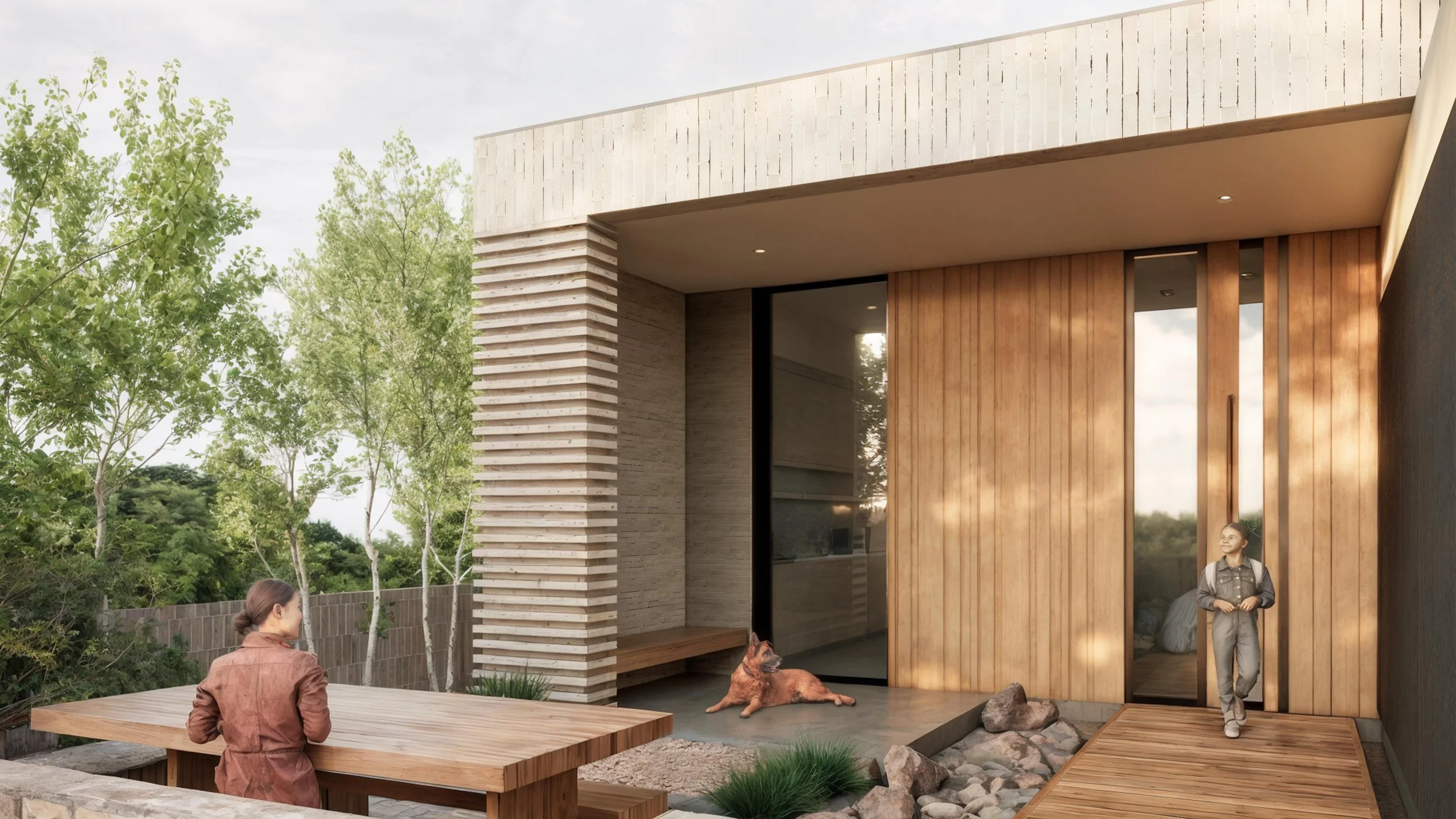
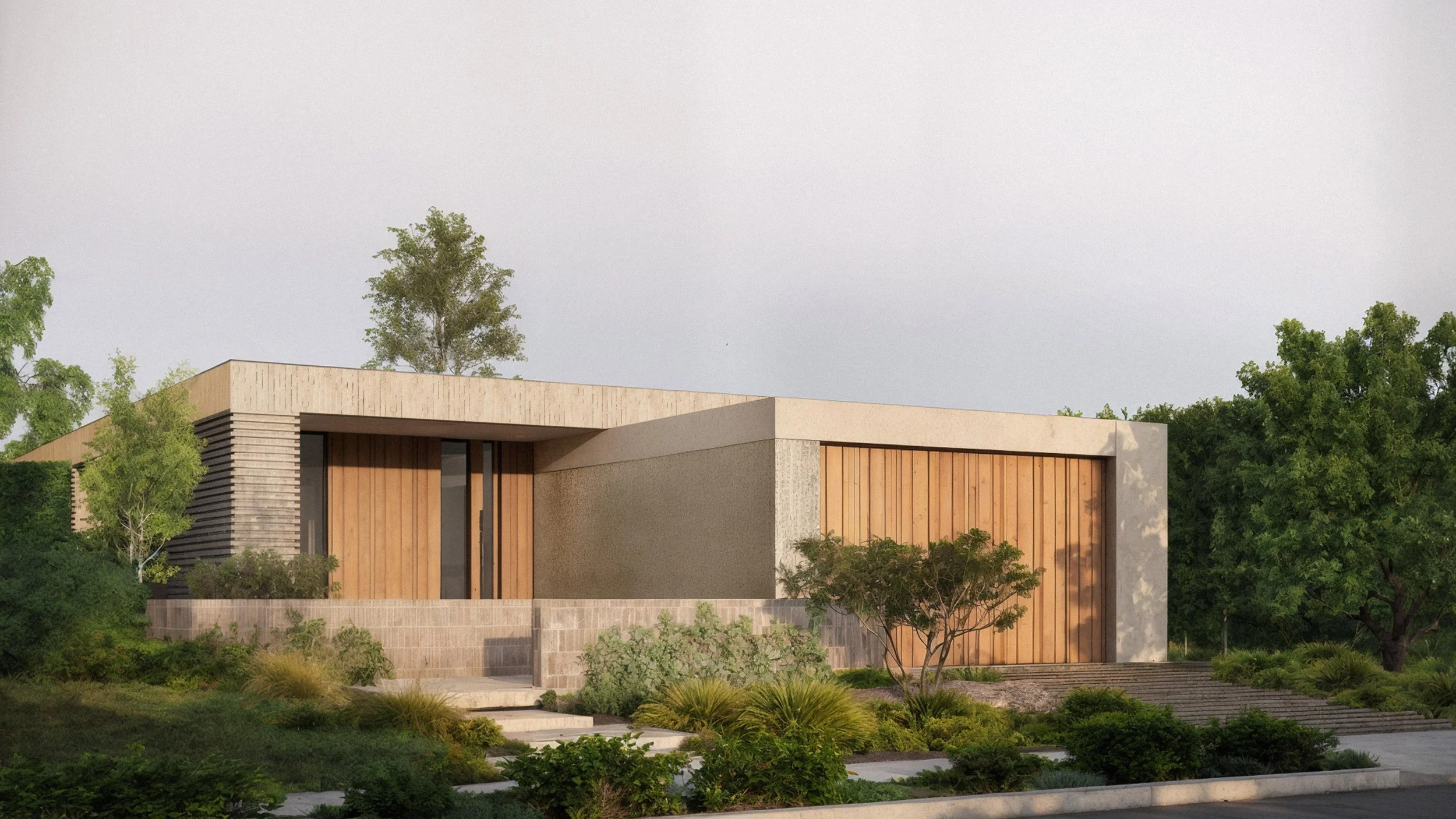
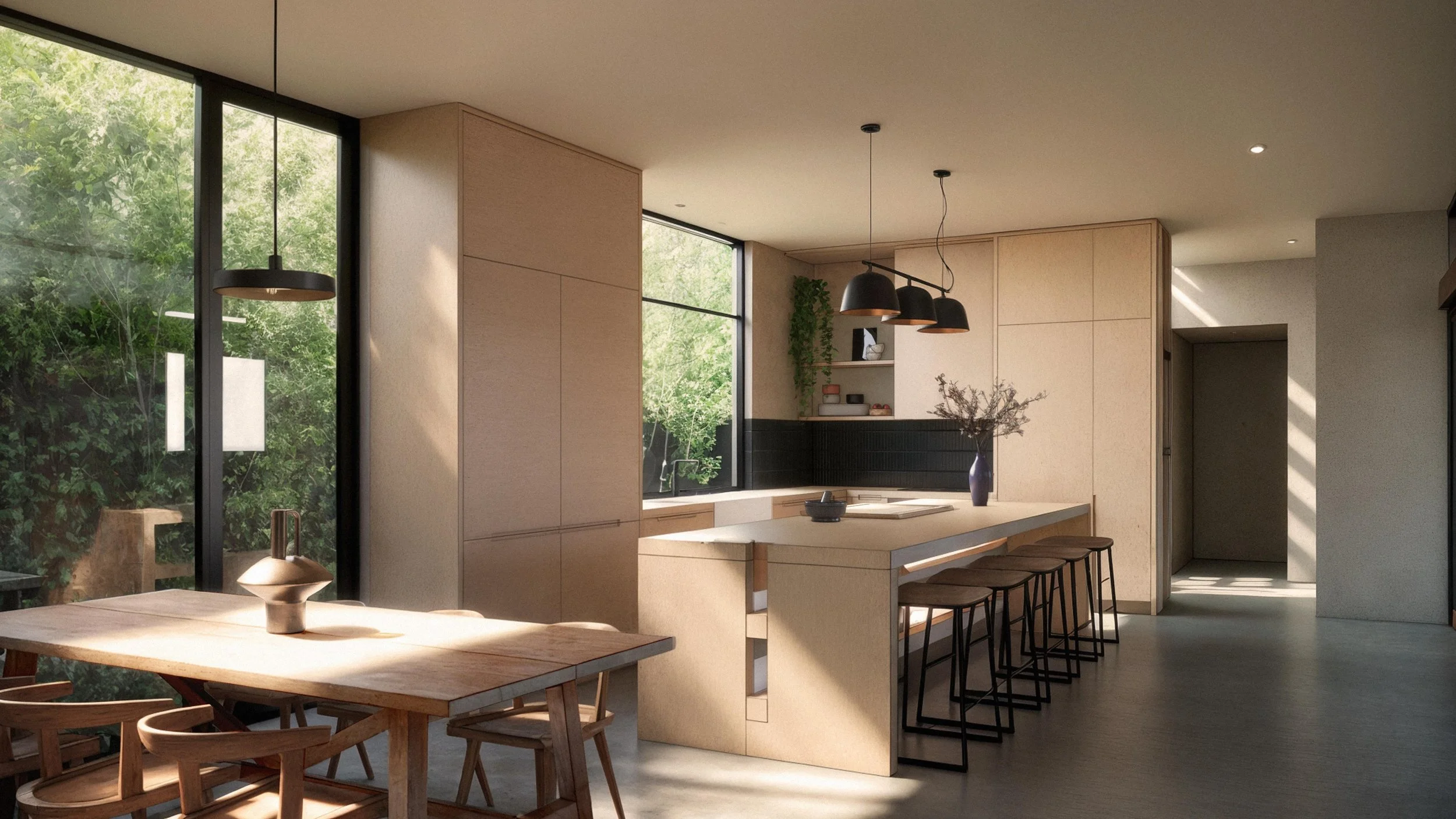
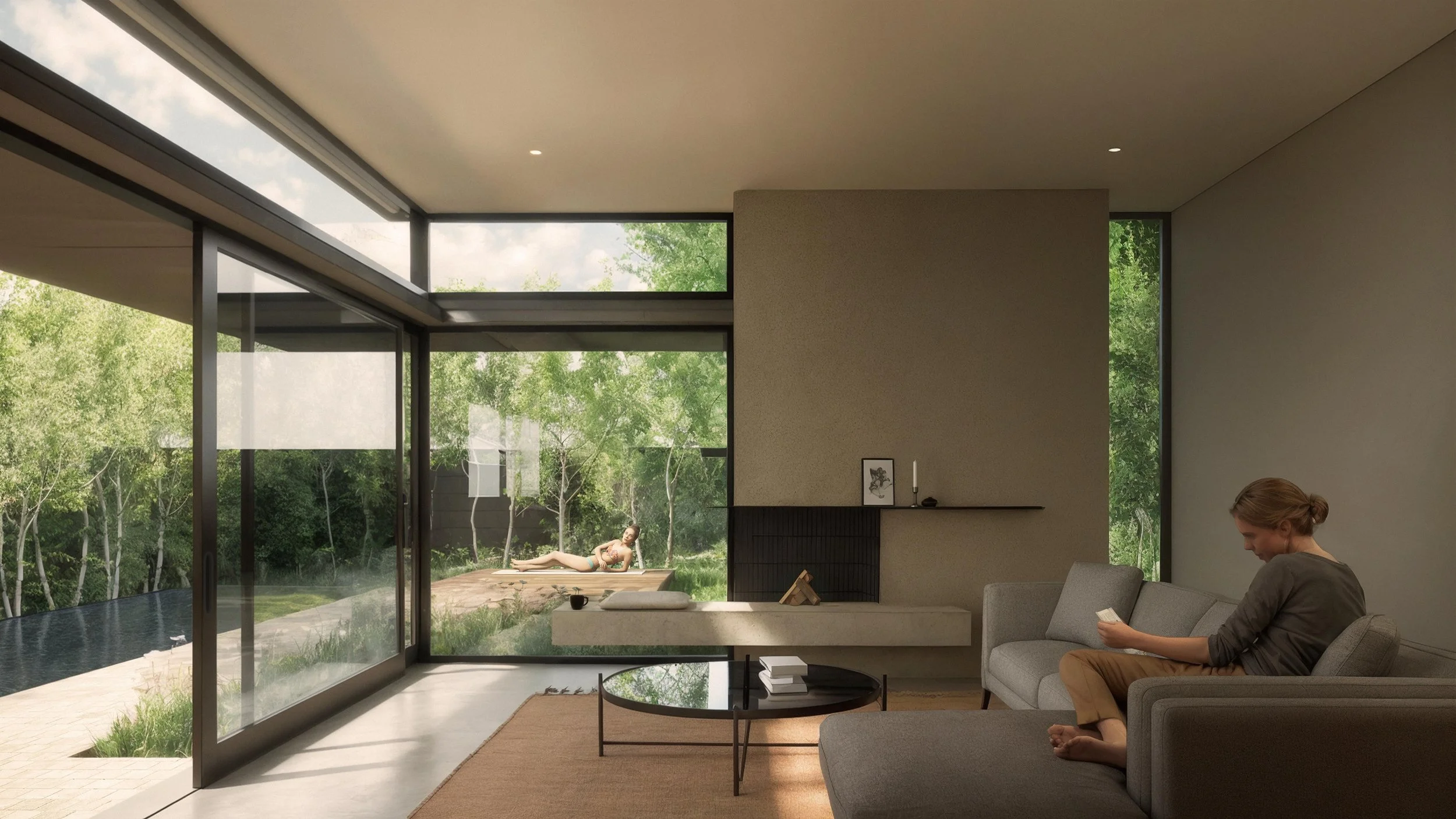
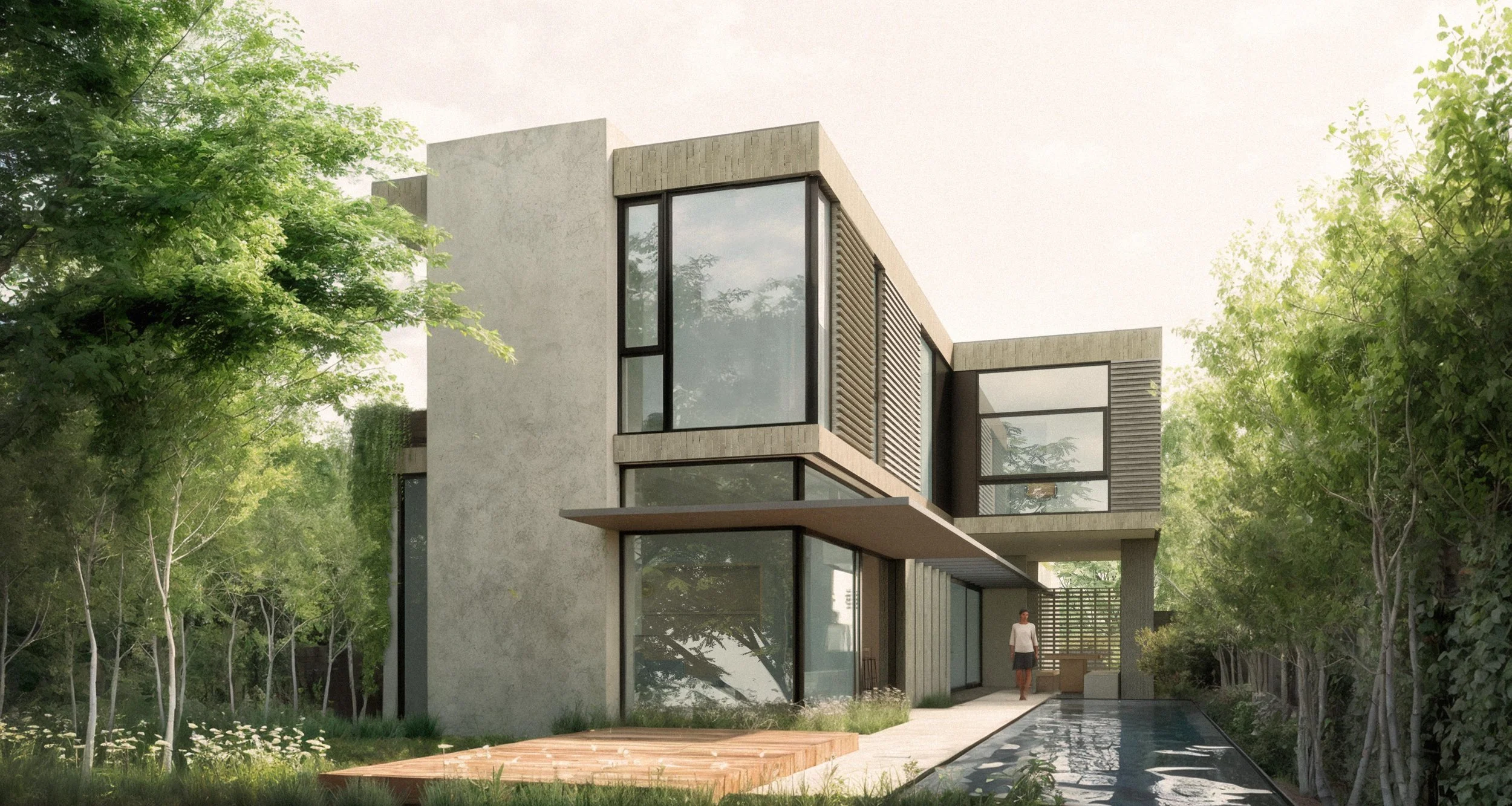
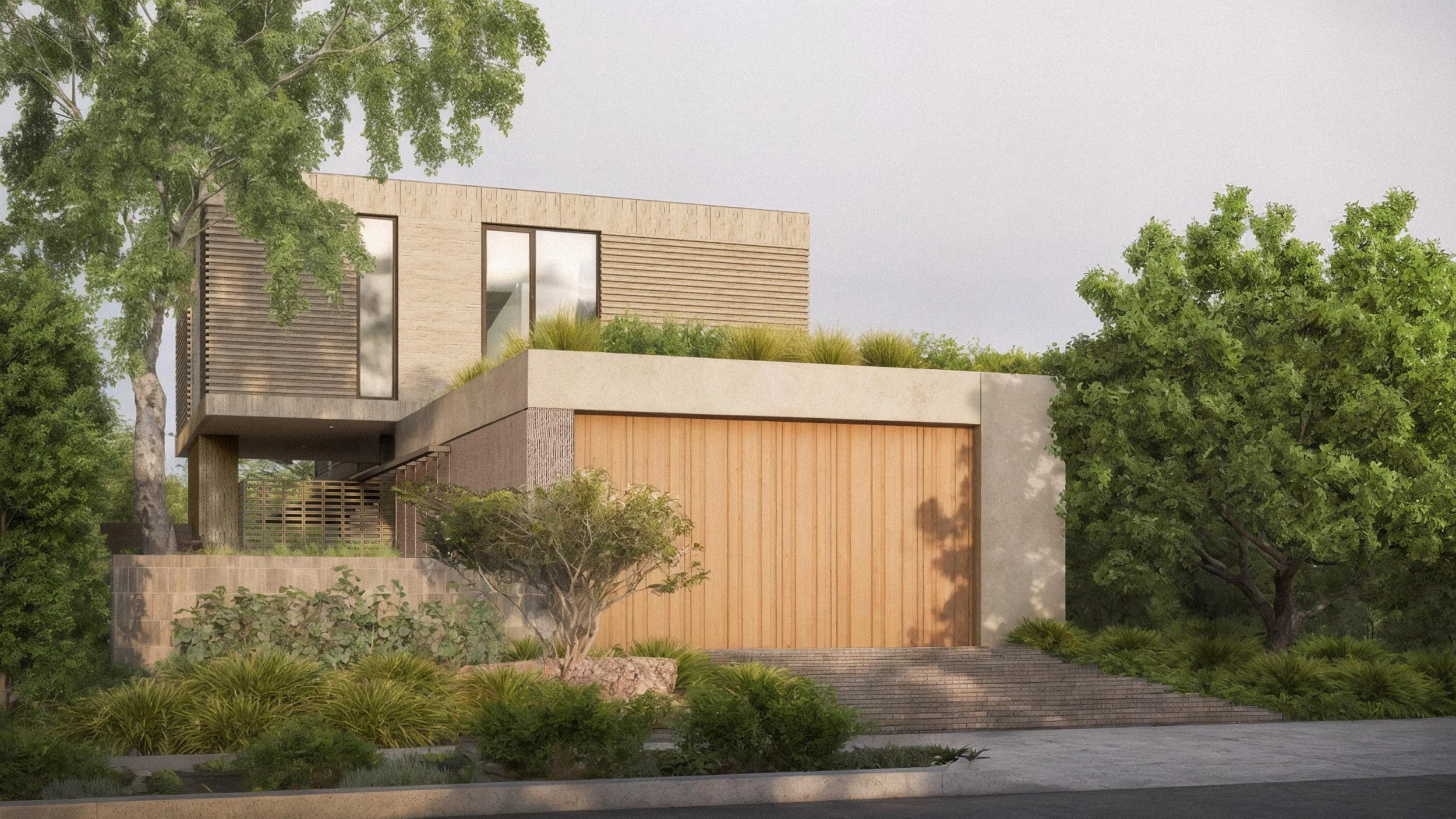
BAR’s Case Study 2.0 House 1 - Fire-resilient design to rebuild L.A. — a model for California.
A Home Lost, A Future Reimagined
In February 2025, a young family who had lost their home in the Eaton Fire in Altadena, California, reached out to our Los Angeles office seeking guidance through the rebuilding process. Moved by the scale of their loss and guided by the human-centered values of our practice, we offered free consultation to support the development of their new home – which later evolved to full design services.
Now in the approval phase, this project became more than a technical exercise in fire-resilient construction. It prompted our team to deepen and expand our thinking about resilience — not only as a set of materials, codes, and defensive strategies, but as a design philosophy. It challenged us to reconsider what “defensible” truly means, and how safety can be achieved without sacrificing openness, dignity, and quality of life.
BAR Resilience Philosophy: Human Experience at the Center
Fire-resilient design, at its core, it is about protecting everyday life and supporting safety, continuity, and dignity for the people who call these places home.
This philosophy guided BAR’s participation in Crest Real Estate’s Case Study 2.0 initiative — a program responding to rebuilding needs across Los Angeles by offering homeowners pre-approved, fire-resilient home designs they can move from concept to permit submittal in as little as two months—a dramatic acceleration compared to traditional timelines. Led by Associate Principal Michael Ben-Meir, our team approached the work with a central belief:
Homes must not only withstand risk — they should restore dignity, calm, and belonging.
Rather than designing houses that feel fortified or defensive, the BAR homes prioritize:
Simple geometries that reduce vulnerability while remaining elegant.
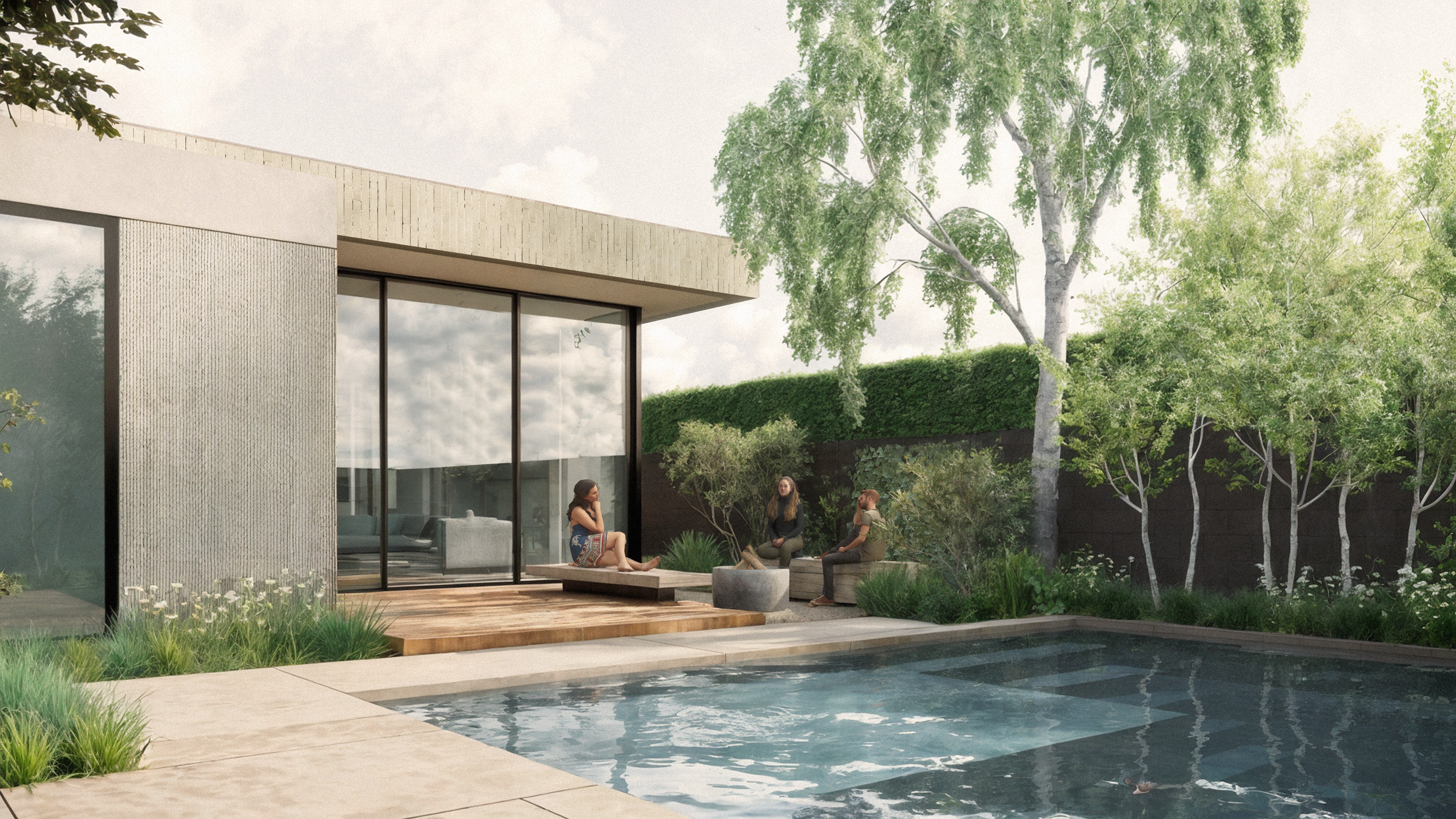
Purposeful outdoor terraces and landscape that invite connection and contemplation while addressing defensible zones.
Cost-efficient Type V construction suitable for both site-built and prefabricated methods maximizing affordability without burdening homeowners with unnecessary cost, upkeep, or complexity.
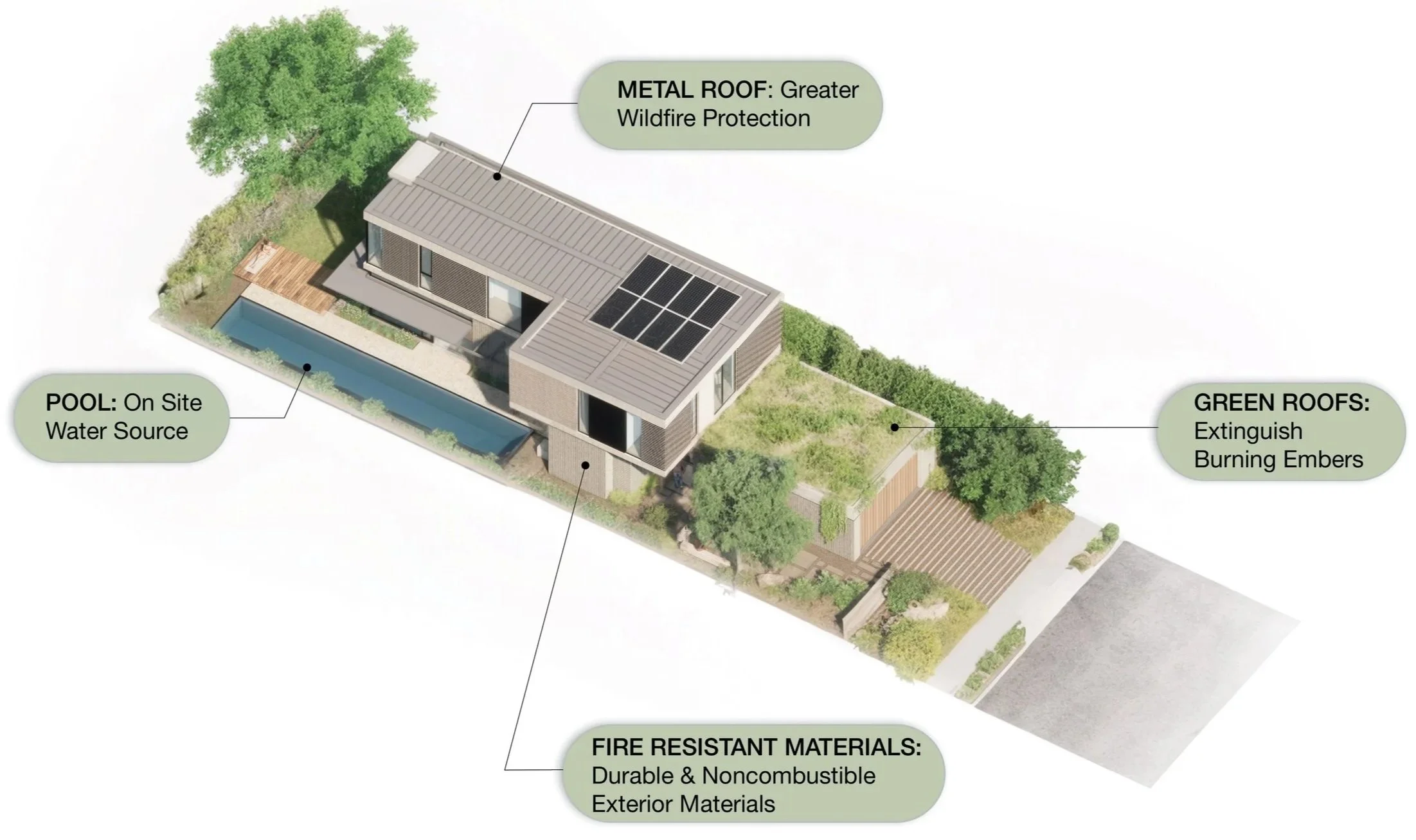
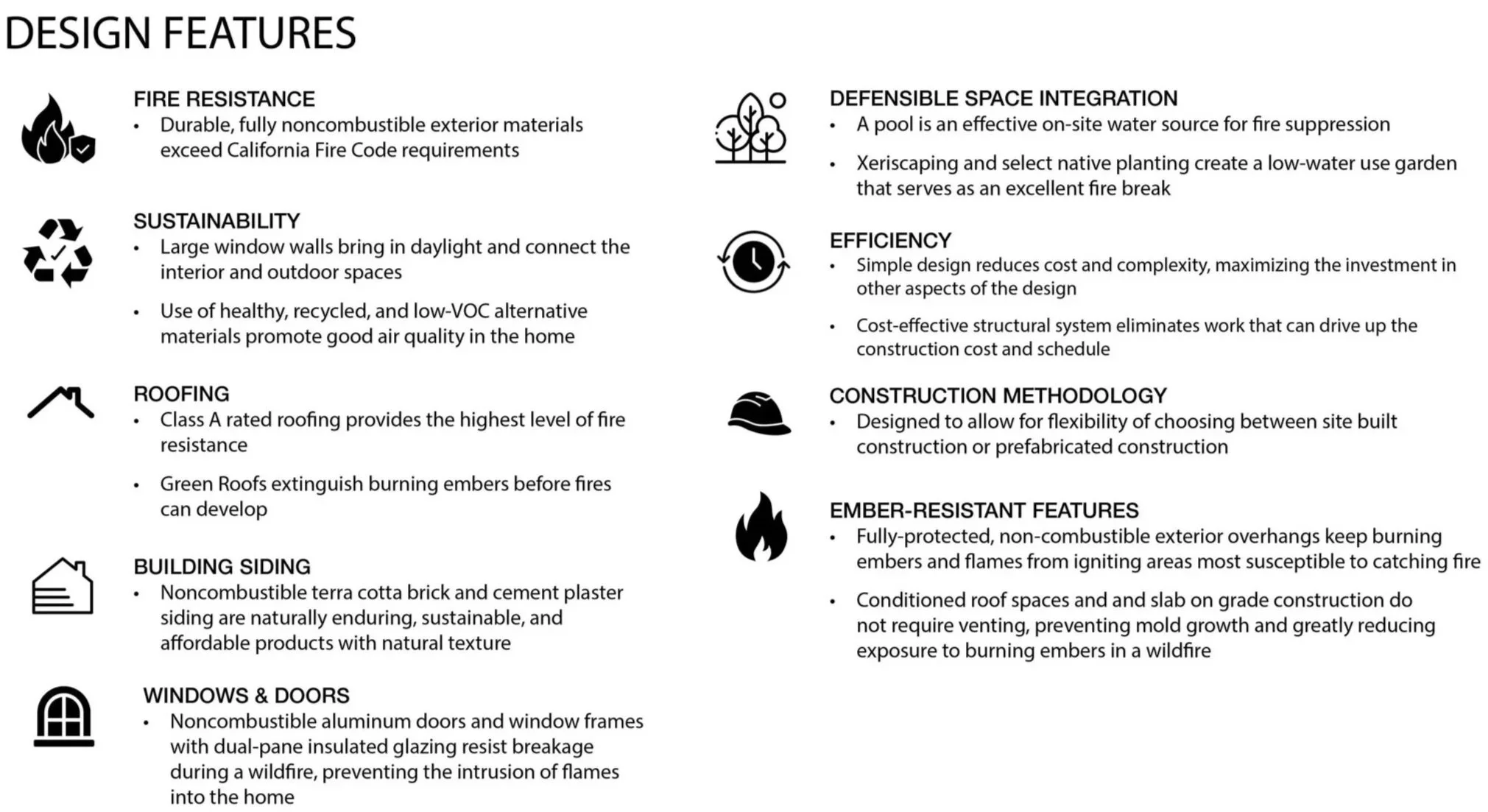
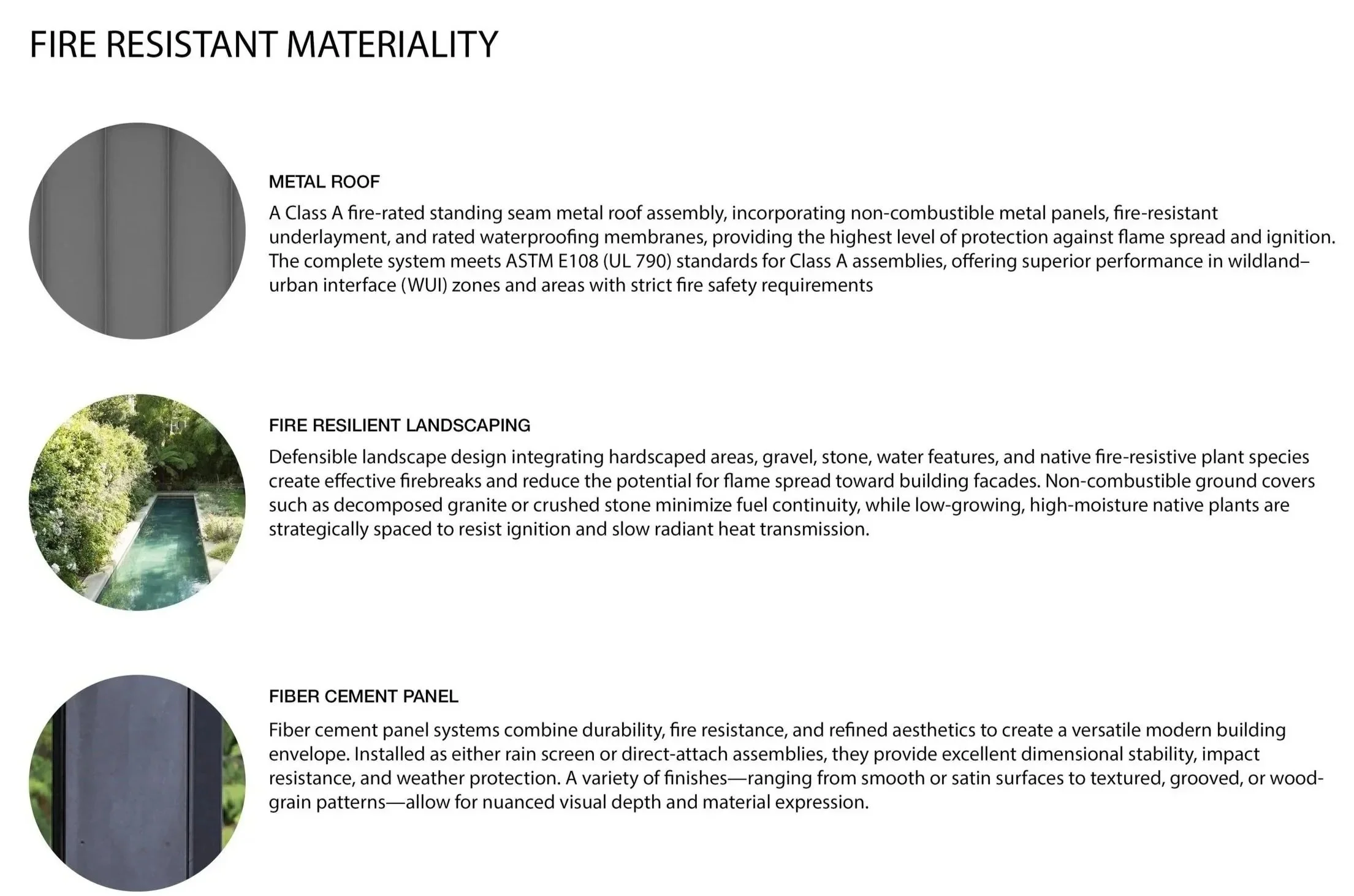
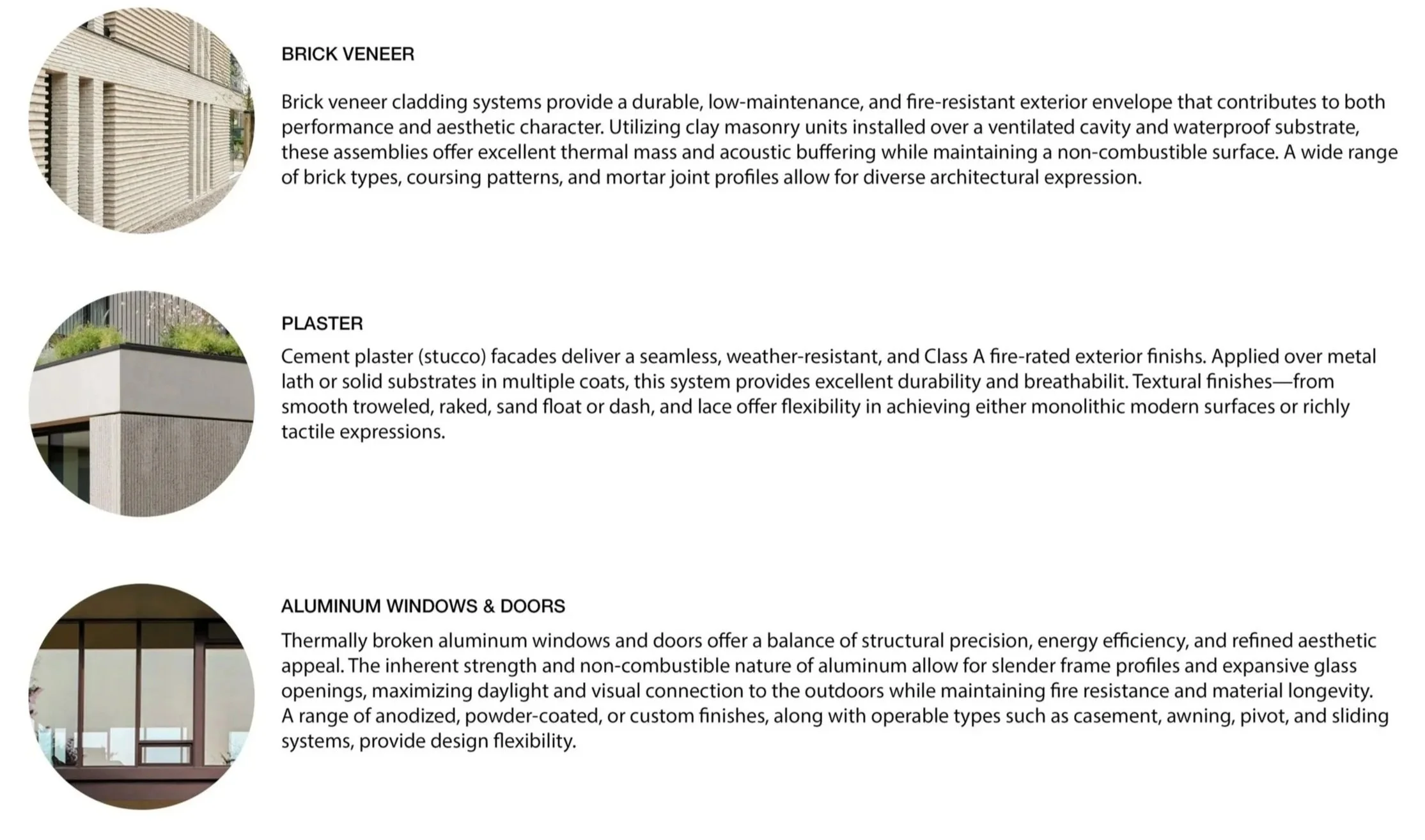
Durable, attractive, and noncombustible materials that create a modern, warm haven and slow heat transmission — terracotta brick, stone, cement plaster, metal, composite wood siding, and mineral wool insulation.
Ember-resistant vents and gutter protection, as well as exterior-mounted wildfire defense sprinkler systems.
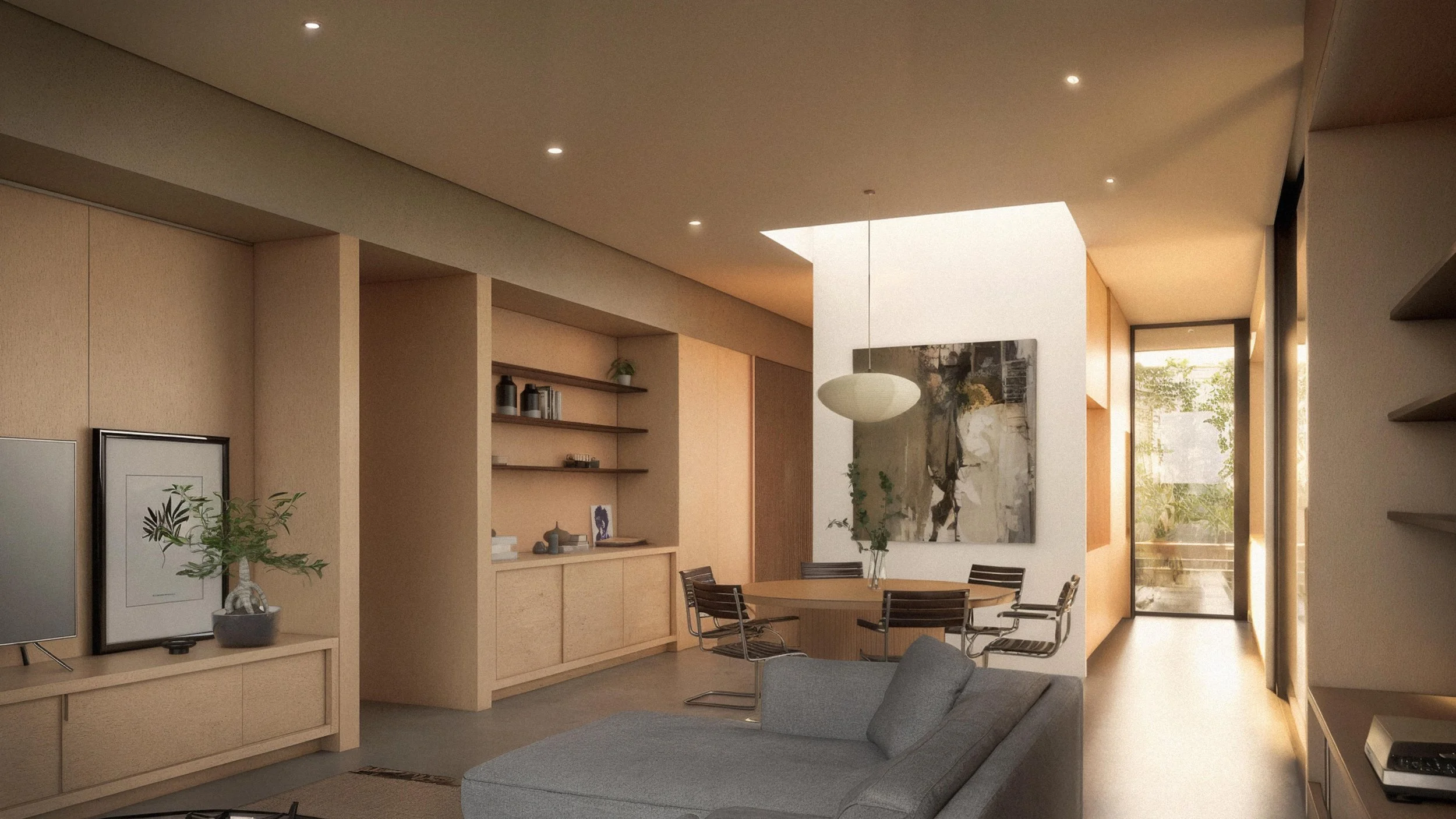
Natural light with insulated tempered glazing that reduces vulnerability.
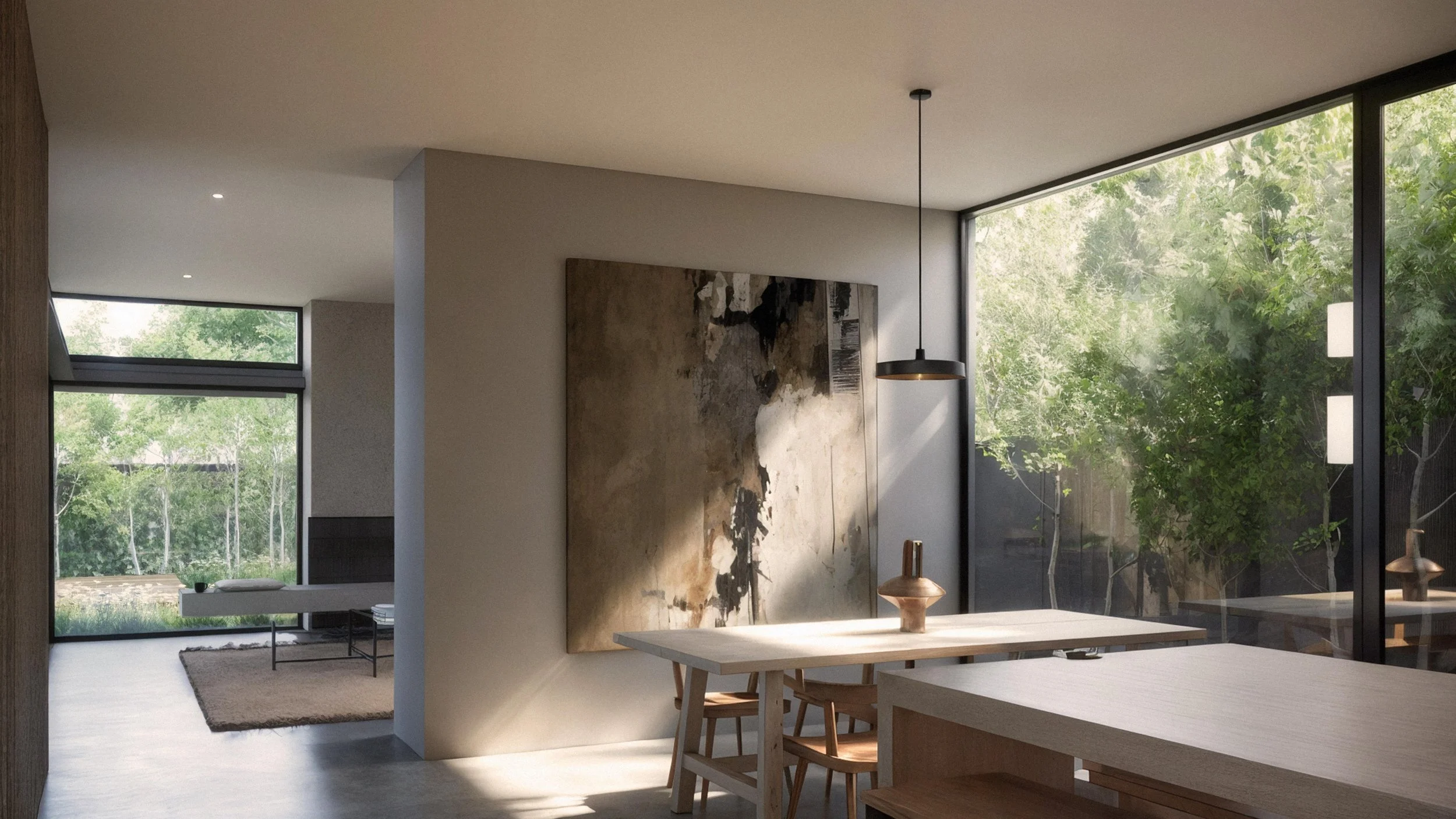
BAR Case Study 2.0 House 2 - Natural light with insulated tempered glazing.
In Michael’s words, as featured in LUXE Interiors + Design:
“Although we build in the present, we must design in anticipation of future needs and concerns — embracing new values, bold strategies, and evolving technologies.” Resilient design is less about reacting to disaster, and more about supporting life.
State Guidelines and New Fire-Related Building Code
Across California, the conversation around wildfire resilience continues to evolve. The California Department of Forestry and Fire Protection (CAL FIRE) and the Office of the State Fire Marshal (OSFM) offer a vast array of content and educational programs to support local communities in defense preparedness against fires.
According to OSFM’s website, “public fire-safety education, law enforcement and fire protection prevent 98% of California wildfires from becoming large or damaging”. In California’s fire-prone environments, large wildfires are inevitable, but the disastrous house loss associated with interface fires can be prevented by reducing hazardous conditions at and immediately around buildings before the fires start.
In recent years, the building guidelines for Wildland Urban Interface (WUI) have been evolving towards:
Greater emphasis on defensible space and hazardous vegetation management – Measures can be found in the Home Hardening Guidelines.
Identification of WUI areas as they rapidly expand countrywide (2M acres per year, according to FEMA’s U.S. Fire Administration). For more information access Fire Hazard Severity Zones and Fire and Resource Assessment Program (FRAP) websites.
Building construction methods that reduce the hazard of building ignition.
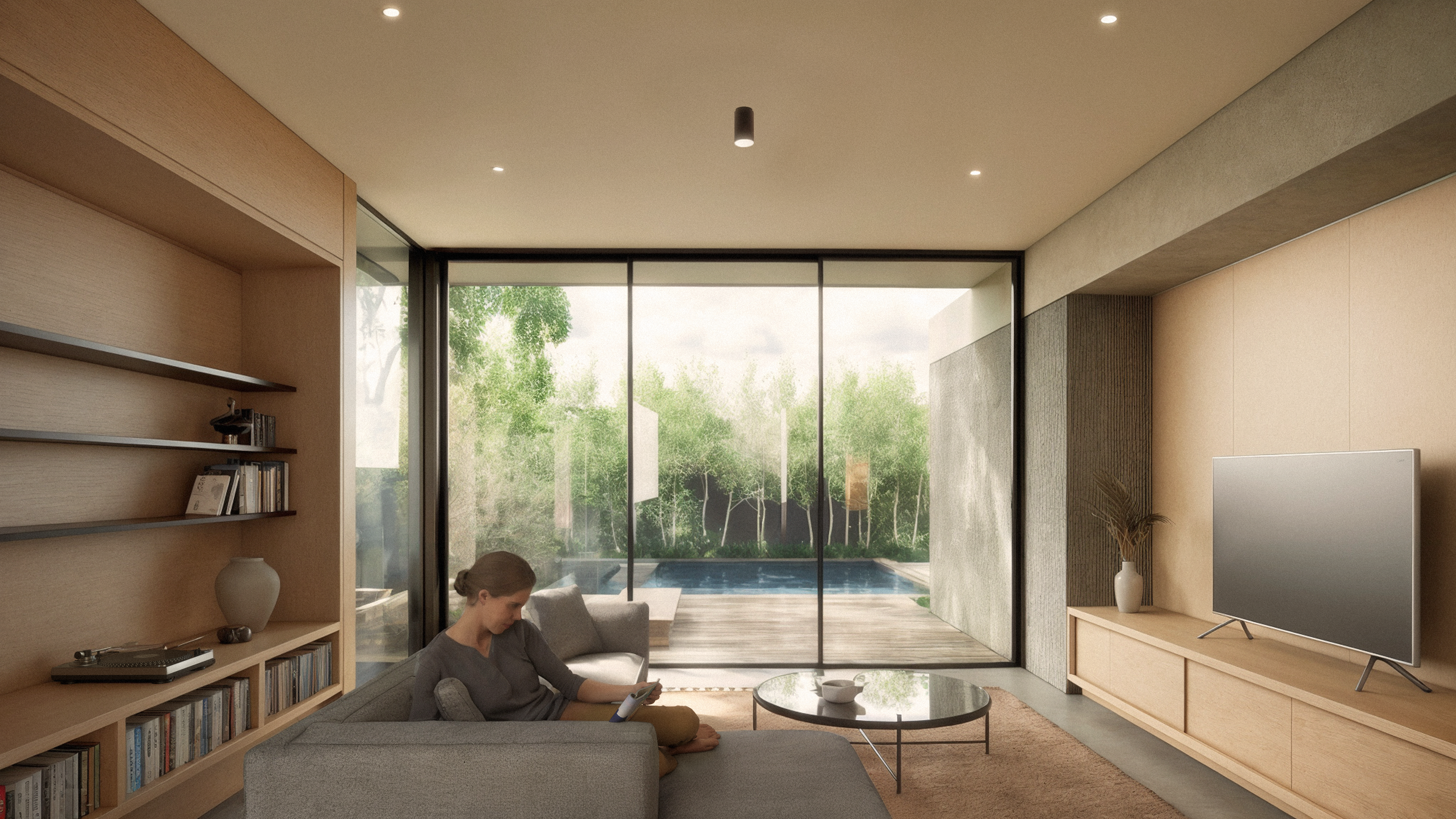
Bar’s Case Study 2.0 House 1 - Fire-resilient materiality and integration of indoor and outdoor living
The most recent update to California's fire-related building codes is the 2025 California Fire Code (Title 24, Part 9), which was published on July 1, 2025 and went into effect on January 1, 2026*. Key updates from the previous edition - the 2022 California Fire Code - include:
New Wildland-Urban Interface (WUI) Code: A major addition is Part 7 — California Wildland-Urban Interface Code. This new standalone code consolidates wildfire protection provisions previously scattered across the building, residential, and fire codes into one specialized document for easier compliance.
Fire-Rated Vents: Stricter standards now require fire-rated vents to reduce smoke spread and block embers from entering homes during wildfires.
Fire Alarm & Safety Devices:
- Adds requirements for interior audible/visual fire alarm devices in certain sprinkler supervision systems.
- Removes the 72-hour standby battery requirement for some fire alarm systems.
Access & Infrastructure:
- Increases fire lane widths for aerial access from 26 feet to 28 feet.
- Requires address illumination for new commercial buildings.
Vegetation Management: New rules regarding vegetation clearance for buildings under construction. Additionally, some local jurisdictions may have separate wildfire-related landscaping bans (e.g., banning flammable plants within 5 feet of a home) effective early 2026.
While there is an increasing collaboration between city planners, insurers, and communities, the path to rebuilding remains complex. Permitting timelines, insurance interpretation, budget constraints, new codes, and emotional fatigue can weigh heavily on property owners.
This is where collective effort matters — and BAR plays a supporting role.
Supporting Communities: Guidance and Resources
Following the fires, our team dedicated time to affected homeowners offering free consultations on new regulations, budgets, insurance implications, demolition logistics, and pathways forward.
For homeowners navigating rebuilding in California, valuable resources may include:
local planning departments and WUI guidelines.
wildfire rebuilding assistance programs.
professional architectural counsel.
community organizations offering financial or advisory support.
published guidance from civic agencies and professional associations ( links below ).
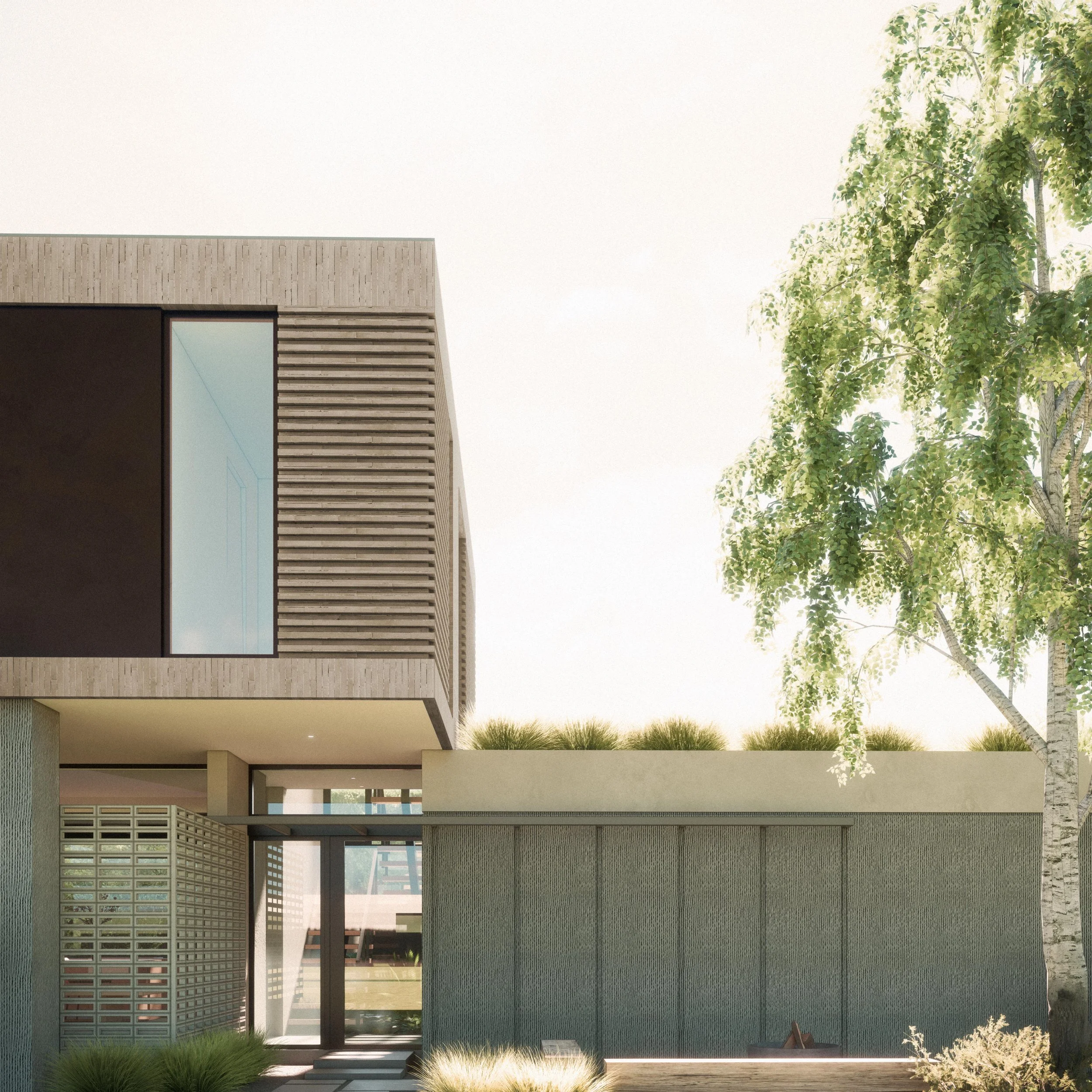
BAR’s Case Study 2.0 House 2 - Simple geometries that reduce vulnerability.
Other industry organizations and agencies offering resources:
AIA California (American Institute of Architects): Provides news and resources on resilience and recovery, including guides for designing homes that withstand wildfires.
California Building Industry Association (CBIA): Offers a Codes Corner with summaries of Title 24 changes and a Wildfire Relief Resources hub for rebuilding stronger, safer homes.
National Fire Protection Association (NFPA): Manages the Firewise USA program, which provides a framework for neighbors to work together to reduce wildfire risk.
California Fire Safe Council (CFSC): Supports a network of over 300 local Fire Safe Councils that help communities with local mitigation planning and grant funding.
LA Rises: A state-supported portal launched in late 2025 that uses AI-powered permitting tools to help fire survivors speed through rebuilding approvals.
American Red Cross: Provides long-term recovery grants for housing stability and community resilience in the wake of the 2025 wildfires.
A California Practice Shaped by California Conditions
BAR Architects & Interiors was founded — and remains deeply rooted — in California. For decades, we have worked across the landscapes that define the state such as steep hillsides and canyons, wildland-urban interface neighborhoods, dense urban corridors, and zones shaped by wind, salt, and drought.
Designing here requires fluency in seismic realities, evolving fire codes, and complex regulatory frameworks — all while ensuring architecture remains humane, inspiring, and connected to its surroundings.
For our Altadena clients—a creative couple welcoming a new baby and now looking toward the completion of their modernist-inspired home in 2027—fire resilience is part of something much larger. It is what makes it possible to look forward again, to rebuild with confidence, and to imagine a future in which design supports safety and a renewed sense of belonging and wellbeing.
Stay tuned for our next BAR Talk and join the conversation by sharing your insights and experiences with fire-resilient design on LinkedIn.
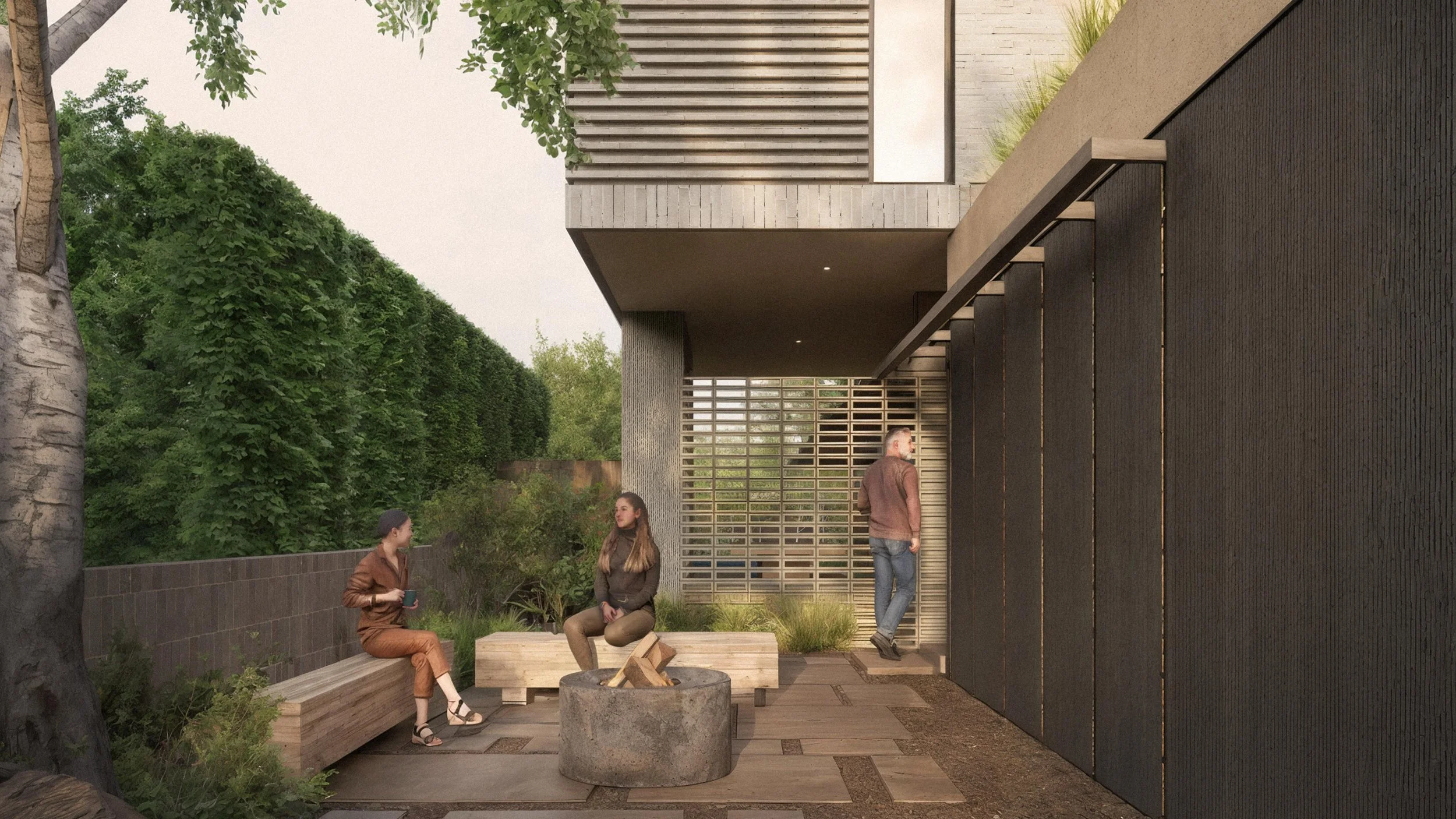
BAR’s Case Study 2.0 - House 2
*Note: Code Deadlines - Projects submitted before January 1, 2026, must follow the 2022 edition. New Code Effective Date: January 1, 2026. All new permit applications submitted on or after this date must comply with the 2025 standards. Exceptions: In December 2025, Governor Newsom issued an executive order to temporarily suspend some 2025 building code requirements for residents rebuilding from recent wildfires to avoid delays in their recovery. For detailed documentation, access the full 2025 California Fire Code and other Title 24 parts through the California Building Standards Commission (CBSC)